Related Potato Ingredient · Native Starch

Food-Grade Native Potato Starch for Thickening, Binding & Texture

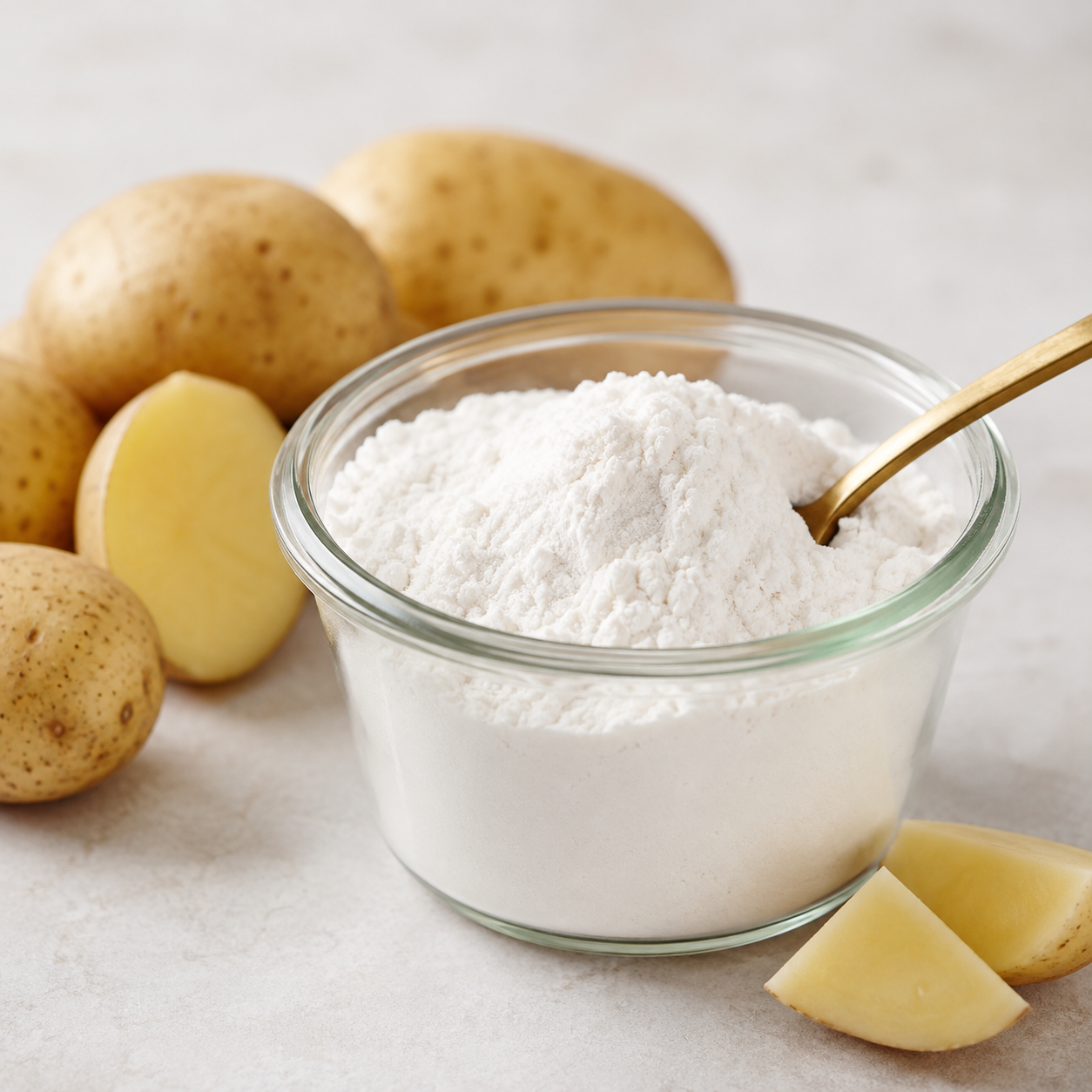
Native Potato Starch is a functional potato ingredient, not a substitute for Potato Flakes or Potato Granules. If your formulation needs whole-potato solids, potato flavour and rehydrated potato texture, compare the two core potato-flour formats first. If the requirement is thickening, binding, body or a starch-specific texture function, move to Native Potato Starch sample and technical review.

Food-Grade Native Potato Starch for Thickening, Binding & Texture

Related Potato Ingredient · Native Starch

First confirm whether you need potato flour solids or starch functionality

In international sourcing, Potato Flour, Potato Flakes, Potato Granules and Potato Starch are easily confused. Native Potato Starch should be evaluated mainly by its function and processing conditions, while flakes and granules are dehydrated whole-potato formats. Clarifying the role before RFQ reduces wrong samples, mismatched quotations and unnecessary formulation trials.

Thickening & body

For soups, sauces, fillings and compound systems, compare viscosity development, body and finished mouthfeel under the buyer’s actual heating conditions. Potato Starch should be selected around viscosity, thickening, binding and process conditions rather than treated as equivalent to Potato Flakes or Potato Granules. Supplier data should also be compared under equivalent test methods.

Binding & structure

In meat, formed and prepared foods, validate water management, forming stability and structure after cooking in the complete recipe. Potato Starch should be selected around viscosity, thickening, binding and process conditions rather than treated as equivalent to Potato Flakes or Potato Granules. Supplier data should also be compared under equivalent test methods.

Texture adjustment

Starch can influence smoothness, consistency and bite, but the final effect depends on dosage and interaction with proteins, salt, fat, gums and other ingredients. For Potato Starch sourcing, separate whole-potato-solids needs from thickening and binding functions first. If the project also compares Potato Flakes or Potato Granules, review viscosity method, process conditions, sample, TDS and COA separately.

Process fit

Native starch does not automatically solve every heat, shear, acid or freeze-thaw challenge. Where process stress is stronger, compare a suitable Modified Potato Starch grade instead. Potato Starch should be selected around viscosity, thickening, binding and process conditions rather than treated as equivalent to Potato Flakes or Potato Granules. Supplier data should also be compared under equivalent test methods.

Related Potato Ingredient · Native Starch

Start sample review from the finished food and required function

Soups, sauces & seasoning systems

Record the heating profile, target viscosity, smoothness, cooled texture and any water separation or texture change. For Potato Starch sourcing, separate whole-potato-solids needs from thickening and binding functions first. If the project also compares Potato Flakes or Potato Granules, review viscosity method, process conditions, sample, TDS and COA separately.

Meat & prepared foods

Evaluate binding, water retention, forming, cooking loss and finished bite rather than judging the powder by appearance alone. Potato Starch should be selected around viscosity, thickening, binding and process conditions rather than treated as equivalent to Potato Flakes or Potato Granules. Supplier data should also be compared under equivalent test methods.

Bakery, fillings & compound systems

Validate water uptake, structure, filling stability and process compatibility in the full formula, preferably against the current starch under identical conditions. For Potato Starch sourcing, separate whole-potato-solids needs from thickening and binding functions first. If the project also compares Potato Flakes or Potato Granules, review viscosity method, process conditions, sample, TDS and COA separately.

Foods needing whole-potato solids

If the real target is potato flavour, whole-potato solids or rehydrated potato texture, return to Potato Flakes / Potato Granules selection instead of using starch as a substitute. Potato Starch should be selected around viscosity, thickening, binding and process conditions rather than treated as equivalent to Potato Flakes or Potato Granules. Supplier data should also be compared under equivalent test methods.

Related Potato Ingredient · Native Starch

Technical and commercial fields to confirm before bulk purchase

Exact product name / gradeState the Native Potato Starch grade / supplier code, not only “food grade”
Appearance & colourHigh-purity white powder direction; approve against a written appearance standard and retained sample
MoistureThe exact limit depends on the approved grade; TDS/COA should state the specification limit and batch result in %
Viscosity with test conditionsState solids %, temperature profile, instrument, speed and test time together
Particle / sieve information where relevantWhere relevant, provide sieve distribution / particle-size range and the method
Microbiological requirementsCOA should list food-grade microbiological items, methods and batch results
Specification / TDS / COASample, Specification, TDS and COA must refer to the same grade and lot system
Packing, shelf life & lot informationState bag weight, liner, lot code, shelf life and storage conditions

Related Potato Ingredient · Native Starch

Buyer FAQ | Native Potato Starch Sourcing

Is Native Potato Starch the same as potato flour?

No. Potato Flakes and Potato Granules retain dehydrated whole-potato solids and are reviewed for potato character, hydration and finished texture. Native Potato Starch is reviewed mainly for thickening, binding, viscosity and structural functions. In an RFQ, name Potato Starch, Potato Flakes or Potato Granules rather than using Potato Flour alone.

Which food applications can use Native Potato Starch?

Typical discussions include soups, sauces, meat products, prepared foods, fillings and other compound systems requiring starch functionality. Suitability still depends on heating, shear, pH, frozen storage, formulation and target texture, so the buyer should confirm it in the real recipe.

What should buyers compare when sourcing Native Potato Starch?

Confirm the exact grade first, then review the current Specification, TDS and batch COA. Technical comparison may include moisture, appearance, viscosity with its method, microbiological criteria and the functional properties relevant to the application. Results are comparable only when methods and conditions align.

Why is a viscosity number alone not enough?

Viscosity changes with concentration, temperature profile, instrument, speed, time and sample preparation. Two suppliers can report different values simply because the test conditions differ, so compare the value together with the method and conditions.

Can Native Potato Starch replace Modified Potato Starch?

Do not assume so. Strong heating, high shear, acidic systems, freeze-thaw cycles or long storage may require separate validation. If a native grade cannot provide the required stability, the process problem should be used to select a suitable modified grade.

How should a sample be tested for supplier comparison?

For the first comparison, keep the base formula, water level, heating profile, mixing and equipment conditions unchanged and replace only the starch. Record process behaviour, viscosity, finished texture and storage changes so the material effect is easier to isolate.

Should buyers request a sample, TDS and COA before bulk ordering?

Supplier approval normally works best when the sample, current technical documentation and batch documents are reviewed together. Exact document and sample availability should be confirmed for the selected grade, and the RFQ should include the application and expected purchase volume.

How can I get a more accurate quotation from a China Potato Starch supplier?

Provide the finished food, target function, current starch or key technical criteria, expected volume, packing, destination country or port and trade term. Better input helps the supplier recommend the correct grade and build a quotation that can actually be evaluated.

Related Potato Ingredient · Native Starch

If you need starch functionality, start with the formulation and process target

Share the finished food, target viscosity or structure, heating / shear conditions, current grade, expected volume and any Specification, TDS, COA or sample requirements. For Potato Starch sourcing, separate whole-potato-solids needs from thickening and binding functions first. If the project also compares Potato Flakes or Potato Granules, review viscosity method, process conditions, sample, TDS and COA separately.

Send Potato Starch Requirement
Get Price, MOQ & SamplesLive reply 07:00–19:00 (UTC+8) · Daily
Request a Quote
Share 3 quick details — we will prepare specs, MOQ & pricing.
B2B inquiry · quotation & specification support