Supporting Applications · Start from the Finished Food

Other Food Applications for Potato Flakes, Potato Granules & Related Potato Ingredients

Soups, sauces, bakery, noodles, prepared foods, fillings, meat systems and dry blends can require very different potato-ingredient functions. Start by deciding whether the formula needs whole-potato solids and potato character from Potato Flakes or Potato Granules, or a more specific role such as thickening, binding, rapid dispersion, water management or process stability from a related starch or pregelatinized ingredient.

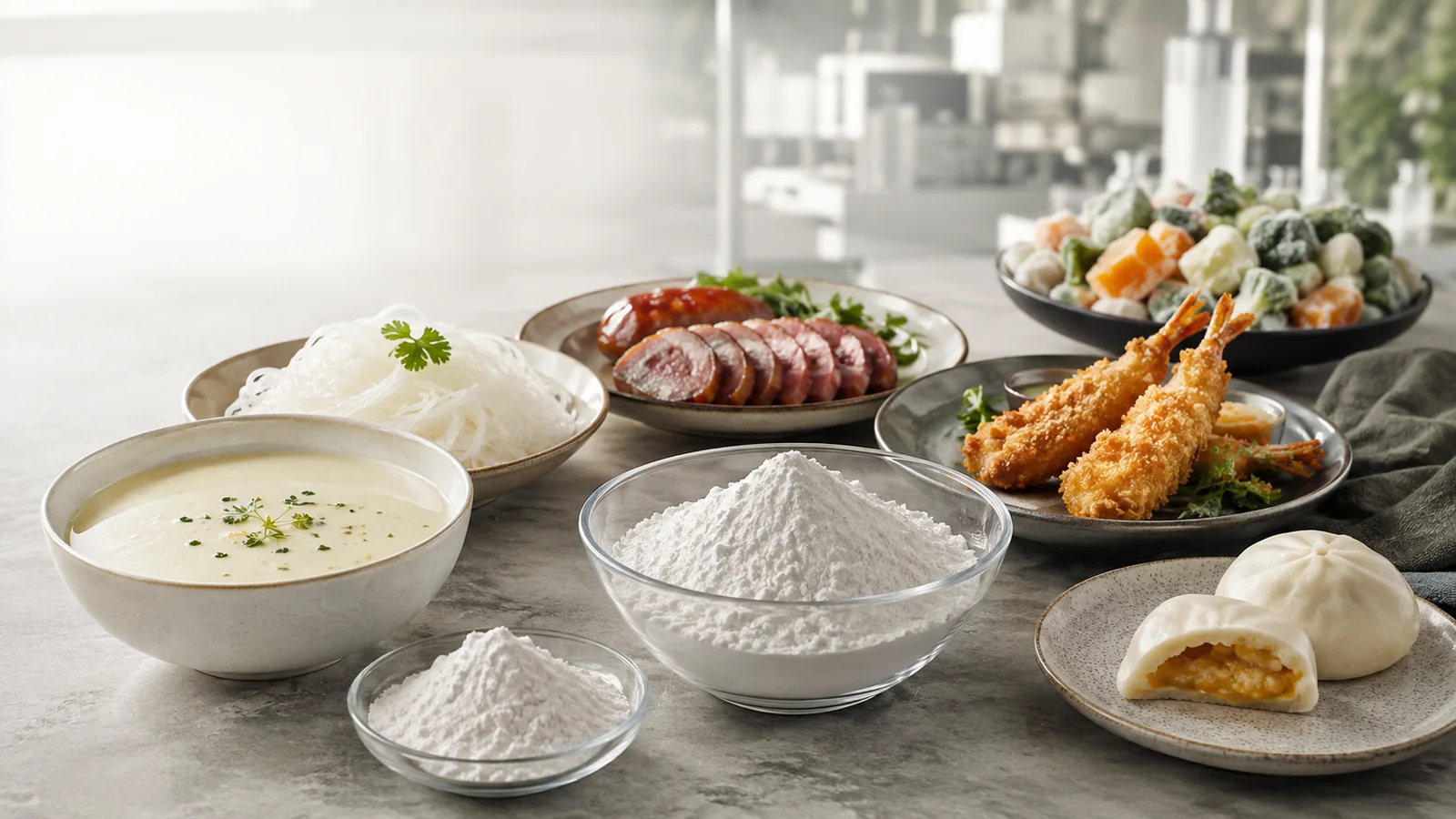
Food applications including soups, sauces, prepared foods and potato-derived ingredients

Application map

Choose the Ingredient from the Function the Finished Food Actually Needs

The key question is not simply “Can potato ingredient X be used in this food?” but “What should the ingredient contribute?” Potato Flakes and Potato Granules provide dehydrated potato solids with different hydration and handling behaviour. Native, modified and pregelatinized potato ingredients become relevant when viscosity, binding, instant dispersion, water management or process stability is the main target.

Soups, sauces & savoury systems

If potato solids, flavour or body are required, trial flakes or granules. If the main need is thickening or viscosity control, compare starch-based options under the real heating and shear conditions. Application selection should begin with the finished food and process. Compare Potato Flakes and Potato Granules under the same conditions for hydration, flow, texture, colour or expansion, then support the bulk-purchase decision with samples, TDS and COA.

Bakery, fillings & cereal-based foods

Review water absorption, dough or batter handling, filling structure, moisture management and finished texture. Start with controlled dosage trials because the effect depends on the complete flour and ingredient system. Do not treat one formula as universal. Define the starting ingredient, critical process variables and test points first, then approve the suitable Potato Flakes or Potato Granules grade through a controlled production trial.

Noodles, formed & prepared foods

Compare whole-potato formats when potato solids and texture contribution are wanted; use starch functionality separately where binding, water retention or process structure is the main requirement. Do not treat one formula as universal. Define the starting ingredient, critical process variables and test points first, then approve the suitable Potato Flakes or Potato Granules grade through a controlled production trial.

Meat, dry blends & formulated foods

Assess dry handling, dosing, water management, binding and finished bite together with the full recipe. Product selection should follow the process problem rather than a broad ingredient name. Do not treat one formula as universal. Define the starting ingredient, critical process variables and test points first, then approve the suitable Potato Flakes or Potato Granules grade through a controlled production trial.

Buyer checklist

Information to Define Before Requesting a Sample

A useful sample request describes the finished product and the process, not only the ingredient name. Do not treat one formula as universal. Define the starting ingredient, critical process variables and test points first, then approve the suitable Potato Flakes or Potato Granules grade through a controlled production trial.

  • Finished food and target texture / flavour
  • Current recipe or current potato ingredient
  • Hydration, cooking, frying, extrusion or heating route
  • Water addition, mixing, shear and holding conditions
  • Target function: potato solids, body, flow, binding, viscosity or water management
  • Sample quantity and A/B trial plan
  • Specification / TDS / COA or destination-market document needs
  • Expected volume, packing, destination and trade term

Supporting information

Choose Whole-Potato Solids or Functional Ingredients by the Real Need

For whole-potato solids, potato character and rehydrated potato texture, begin with Potato Flakes or Potato Granules. For viscosity, binding, rapid dispersion or stronger process stability, review the related starch or pregelatinized ingredient that matches the actual formulation problem. Application selection should begin with the finished food and process. Compare Potato Flakes and Potato Granules under the same conditions for hydration, flow, texture, colour or expansion, then support the bulk-purchase decision with samples, TDS and COA.

Potato Flakes

Start here when rapid hydration, potato solids, potato character or a flakes-led texture contribution is relevant. Typical trials may include fabricated chips, mash, formed foods and bakery systems. Application selection should begin with the finished food and process. Compare Potato Flakes and Potato Granules under the same conditions for hydration, flow, texture, colour or expansion, then support the bulk-purchase decision with samples, TDS and COA.

Potato Granules

Compare where dry flow, dosing, bulk density, controlled rehydration or granular texture matters. They are especially useful to trial in dry-mix, foodservice and extrusion-oriented systems. Do not treat one formula as universal. Define the starting ingredient, critical process variables and test points first, then approve the suitable Potato Flakes or Potato Granules grade through a controlled production trial.

Related functional ingredients

Use Native Potato Starch, Modified Potato Starch or Pregelatinized Potato Flour when the requirement becomes thickening, binding, process stability, rapid dispersion or water management rather than whole-potato solids. Application selection should begin with the finished food and process. Compare Potato Flakes and Potato Granules under the same conditions for hydration, flow, texture, colour or expansion, then support the bulk-purchase decision with samples, TDS and COA.

Buyer FAQ

Questions Buyers May Ask

How should buyers approach a food application that is not covered by a dedicated guide?

Start with the function required in the finished food. Whole-potato solids, potato character, hydration and texture point toward Potato Flakes or Potato Granules; thickening, binding, rapid dispersion or stronger process stability may point toward starch or pregelatinized products. Then validate the selected ingredient in the actual formulation.

How do I choose between Potato Flakes and Potato Granules for a new food project?

Start with the finished food, process and the role of the potato ingredient. Flakes often deserve early testing where rapid hydration and potato-solids texture are important; granules often deserve early testing where dry flow, dosing, bulk density or a more granular rehydration profile matters. If the answer is not obvious, compare both under the same recipe and process conditions.

When should I stop comparing flakes and granules and move to Potato Starch?

When the real requirement is mainly thickening, binding, viscosity or a starch-specific structure rather than whole-potato solids, potato flavour or rehydrated potato texture. Starch is a different functional ingredient and should be approved with its own technical criteria.

Can Potato Flakes or Granules be used in bakery and noodle products?

They can be trialled where the formulation benefits from potato solids, water absorption, body or a specific texture contribution. The useful dosage and effect depend on the flour system, water level, mixing and finished product, so controlled formulation trials are more meaningful than a universal addition rate.

What should be tested in soups, sauces and dry mixes?

First decide whether the goal is potato character and solids or only viscosity and body. Then record dispersion, hydration, lumping, dry-mix behaviour, heating response, finished texture and stability after holding or storage. Different goals can lead to flakes, granules, starch or pregelatinized products.

How should a buyer test a sample fairly?

Keep the first trial controlled. Hold the base formula, water level, temperature, mixing and equipment conditions constant and change only the potato ingredient. Record processing behaviour and the finished-food result before making further formulation adjustments.

What documents should be requested before bulk purchasing?

Request the current Specification or TDS for the selected grade and a batch COA where applicable, then confirm packing, shelf life, lot identification and any buyer or destination-market documents relevant to the order. The documents should match the exact product being sampled and quoted.

What information helps a China potato ingredient supplier recommend the right sample?

Provide the finished food, current formulation or reference ingredient, process route, target texture or function, expected volume, packing and destination. If you already know whether you want Potato Flakes, Potato Granules, Native Potato Starch, Modified Potato Starch or Pregelatinized Potato Flour, state it clearly; otherwise describe the problem you need to solve.

Next step

Send the Finished Food and Process Before Choosing the Ingredient

Share the food application, current ingredient, process conditions, target performance, expected volume and document needs so the first sample discussion starts from the right product family. Buyer approval should connect the application, process, critical performance points and bulk-supply conditions. Potato Flakes and Potato Granules should be compared in the real formulation rather than selected only by name or price.

Send Requirements
Get Price, MOQ & SamplesLive reply 07:00–19:00 (UTC+8) · Daily
Request a Quote
Share 3 quick details — we will prepare specs, MOQ & pricing.
B2B inquiry · quotation & specification support