
For pasteurisation, cooking, sterilisation, baking or prolonged heating, validate viscosity and structural stability under the target temperature and time profile. Buyers should define the processing problem first, then compare candidate modified starch grades for stability, viscosity and texture in the actual food system rather than choosing from a generic product name or one laboratory number.
Related Potato Ingredient · Modified Starch
Food-Grade Modified Potato Starch for Heat, Shear, Acid & Freeze-Thaw Processing
Modified Potato Starch is not one product that can be represented by a single universal specification. Start with the process stress and target function, then select the appropriate grade for sample, TDS, COA and real-process validation. It remains a related functional ingredient; when the purchasing goal is whole-potato solids and potato texture, Potato Flakes and Potato Granules should be compared first.
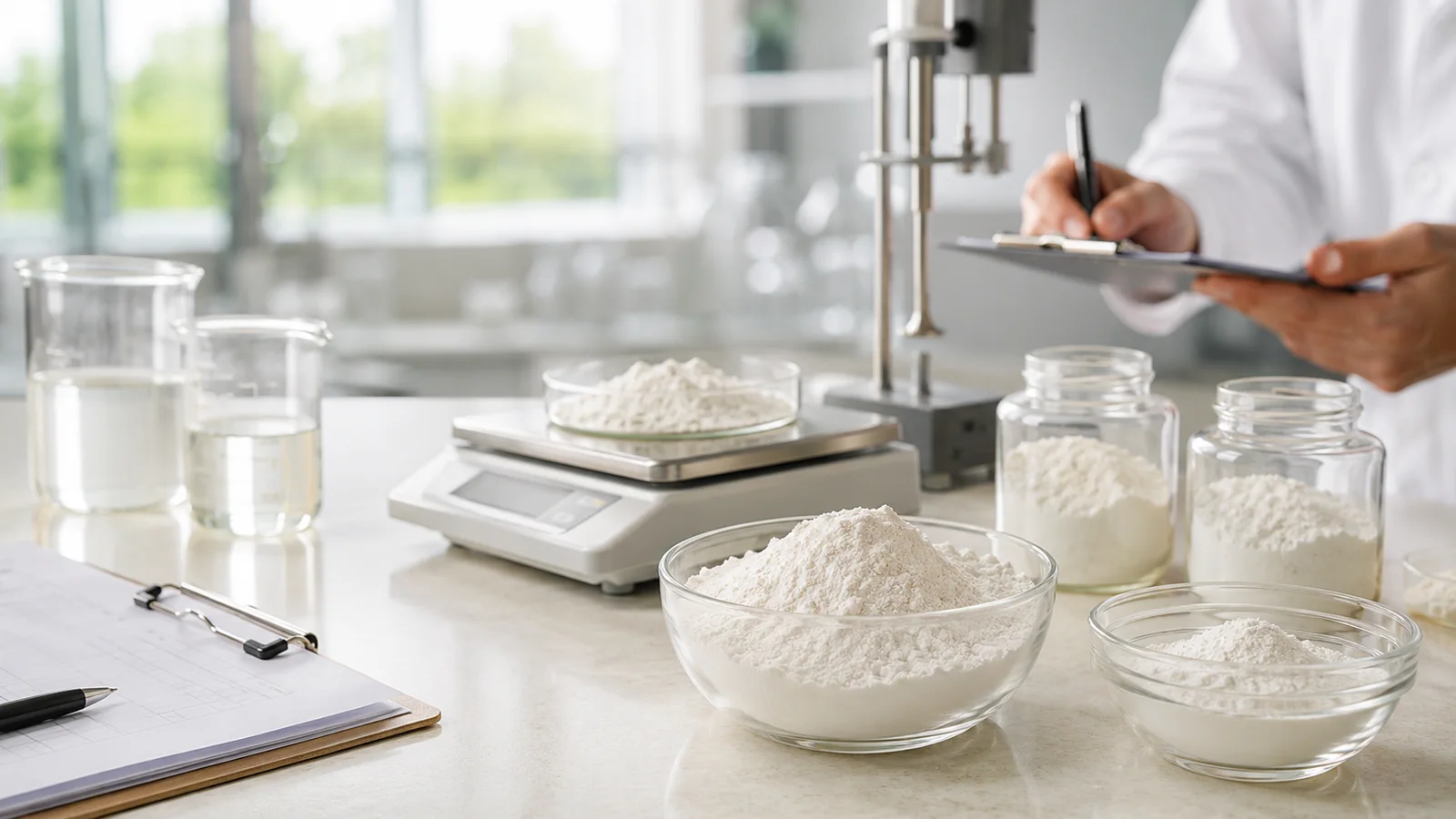
Related Potato Ingredient · Modified Starch
Start from the process stress that creates the need for modification
High-speed mixing, homogenisation, pumping and other mechanical shear can change starch-system performance, so trials should approximate the real production line. Modified Potato Starch should be selected against the actual process stress, including heat, shear, acidity, freeze-thaw or water-retention requirements. Validate the candidate through a sample trial, current TDS and COA; it remains a related functional ingredient beside Potato Flakes and Potato Granules.
Sauces, seasonings and low-pH formulas should be evaluated under the target acidity together with heating and storage rather than by neutral-water data alone. Modified Potato Starch should be selected against the actual process stress, including heat, shear, acidity, freeze-thaw or water-retention requirements. Validate the candidate through a sample trial, current TDS and COA; it remains a related functional ingredient beside Potato Flakes and Potato Granules.
Freezing, thawing, chilling, reheating and shelf storage can affect syneresis, viscosity and eating quality; post-storage performance should be part of grade approval. Modified Potato Starch should be selected against the actual process stress, including heat, shear, acidity, freeze-thaw or water-retention requirements. Validate the candidate through a sample trial, current TDS and COA; it remains a related functional ingredient beside Potato Flakes and Potato Granules.
Related Potato Ingredient · Modified Starch
Different food systems require different functional results
Sauces, seasonings & soups
Compare viscosity after heat and shear, smoothness, cling, cooled texture and stability during storage. Modified Potato Starch should be selected against the actual process stress, including heat, shear, acidity, freeze-thaw or water-retention requirements. Validate the candidate through a sample trial, current TDS and COA; it remains a related functional ingredient beside Potato Flakes and Potato Granules.
Frozen & prepared foods
Validate water separation, texture collapse and viscosity change after freeze-thaw, chilled storage and reheating. Buyers should define the processing problem first, then compare candidate modified starch grades for stability, viscosity and texture in the actual food system rather than choosing from a generic product name or one laboratory number.
Meat & compound foods
Review binding, water retention, forming, cooking loss and finished bite in the complete formulation. Buyers should define the processing problem first, then compare candidate modified starch grades for stability, viscosity and texture in the actual food system rather than choosing from a generic product name or one laboratory number.
Industrial blends & replacement projects
If the buyer already uses a modified starch, provide the current product, function, key data and process problem so selection can target a replacement rather than a generic name. Modified Potato Starch should be selected against the actual process stress, including heat, shear, acidity, freeze-thaw or water-retention requirements. Validate the candidate through a sample trial, current TDS and COA; it remains a related functional ingredient beside Potato Flakes and Potato Granules.
Related Potato Ingredient · Modified Starch
A four-step buyer route for Modified Potato Starch
- 01Define the finished food, current problem and current starch
- 02Confirm temperature, shear, pH, freezing and storage conditions
- 03Select candidate grades and run controlled A/B trials
- 04Approve supply using Specification, TDS, COA, trial results and commercial terms
Related Potato Ingredient · Modified Starch
Documents and technical values must match the exact grade
Exact modification type / commercial grade
Current Specification / TDS
Batch COA where applicable
Viscosity value with complete test conditions
Target function and recommended application scope
Microbiological / compliance document requirements
Packing, shelf life & lot traceability
Related Potato Ingredient · Modified Starch
Buyer FAQ | Modified Potato Starch Sourcing
Can all Modified Potato Starches be used interchangeably?
No. Grades may be designed for different heat, shear, acid, freeze-thaw, water-retention or texture requirements. Two products can both be called Modified Potato Starch and still require separate process and sample validation before any 1:1 replacement.
Should I start from the product name or from the process problem?
Start from the process problem. The finished food, current starch, temperature, shear, pH, frozen storage and target texture give a supplier much better selection information than the phrase “modified starch” alone. Buyers should define the processing problem first, then compare candidate modified starch grades for stability, viscosity and texture in the actual food system rather than choosing from a generic product name or one laboratory number.
Why is there no single universal viscosity specification?
Different modification types, grades and test methods cannot be represented by one value set. A purchase decision should use the current Specification, TDS and COA for the selected grade together with clearly stated test conditions.
How should I compare a new sample with my current Modified Starch?
Keep formula, dosage, heating profile, mixing or shear, pH and cooling conditions as constant as possible in the first trial. Record process behaviour, finished texture, water separation and post-storage changes before making formulation adjustments.
What information is useful for a low-pH or acidic food?
Provide target pH, the acid or formulation context, heating conditions, shear, filling and storage route and the texture that must be maintained. Acidity is only one variable and should be considered with the full process. Modified Potato Starch should be selected against the actual process stress, including heat, shear, acidity, freeze-thaw or water-retention requirements. Validate the candidate through a sample trial, current TDS and COA; it remains a related functional ingredient beside Potato Flakes and Potato Granules.
What should be tested for frozen foods?
In addition to production-stage viscosity, record texture before freezing, water separation after thawing, eating quality, reheating behaviour and changes during storage. For frozen and prepared foods, post-storage stability can be more informative than the fresh product alone.
How do I choose between Native and Modified Potato Starch?
If a native grade already meets the required viscosity, structure and stability under the buyer’s process, there is no reason to choose a modified grade only because the name sounds more advanced. Modified grades become relevant when heat, shear, acidity, freeze-thaw or storage creates a performance gap.
How can I receive a more relevant sample and quotation?
Share the finished food, current product or reference TDS, process problem, processing conditions, key criteria, expected volume, packing, destination and required documents. More specific input leads to more targeted grade selection and pricing.
Related Potato Ingredient · Modified Starch
Start with the process problem you want to solve
Share the finished food, current starch, heat, shear, pH, freezing / storage conditions, target texture and expected volume so the discussion can move to candidate grades, samples and documents. Modified Potato Starch should be selected against the actual process stress, including heat, shear, acidity, freeze-thaw or water-retention requirements. Validate the candidate through a sample trial, current TDS and COA; it remains a related functional ingredient beside Potato Flakes and Potato Granules.