Frozen Potato Products · Foodservice & Retail

Frozen French Fries for Foodservice, Retail & Distribution

For buyers sourcing frozen finished potato products, approval should start with cut format, after-fry performance, packing and cold-chain requirements. Samples should be tested under the buyer’s actual fryer, load and holding conditions before commercial specifications and shipment terms are finalized. Bulk French fries sourcing should also align packing, frozen condition, destination cold chain and transport conditions with the approved frying trial rather than relying on appearance or one generic frying setting.

Frozen French fries for foodservice and distribution purchasing

Product selection

Choose the Cut by Serving Channel and Frying Performance

Thin and thicker cuts do not behave identically. Foodservice and distribution buyers should compare cooking speed, surface crispness, potato-centre texture, strip length, breakage, colour and holding performance before approving a SKU. Bulk French fries sourcing should also align packing, frozen condition, destination cold chain and transport conditions with the approved frying trial rather than relying on appearance or one generic frying setting.

Shoestring / thin cut

A thinner cut can support faster final frying and a lighter, crisp serving style when it matches the buyer’s equipment and service speed. Bulk French fries sourcing should also align packing, frozen condition, destination cold chain and transport conditions with the approved frying trial rather than relying on appearance or one generic frying setting.

Classic straight cut

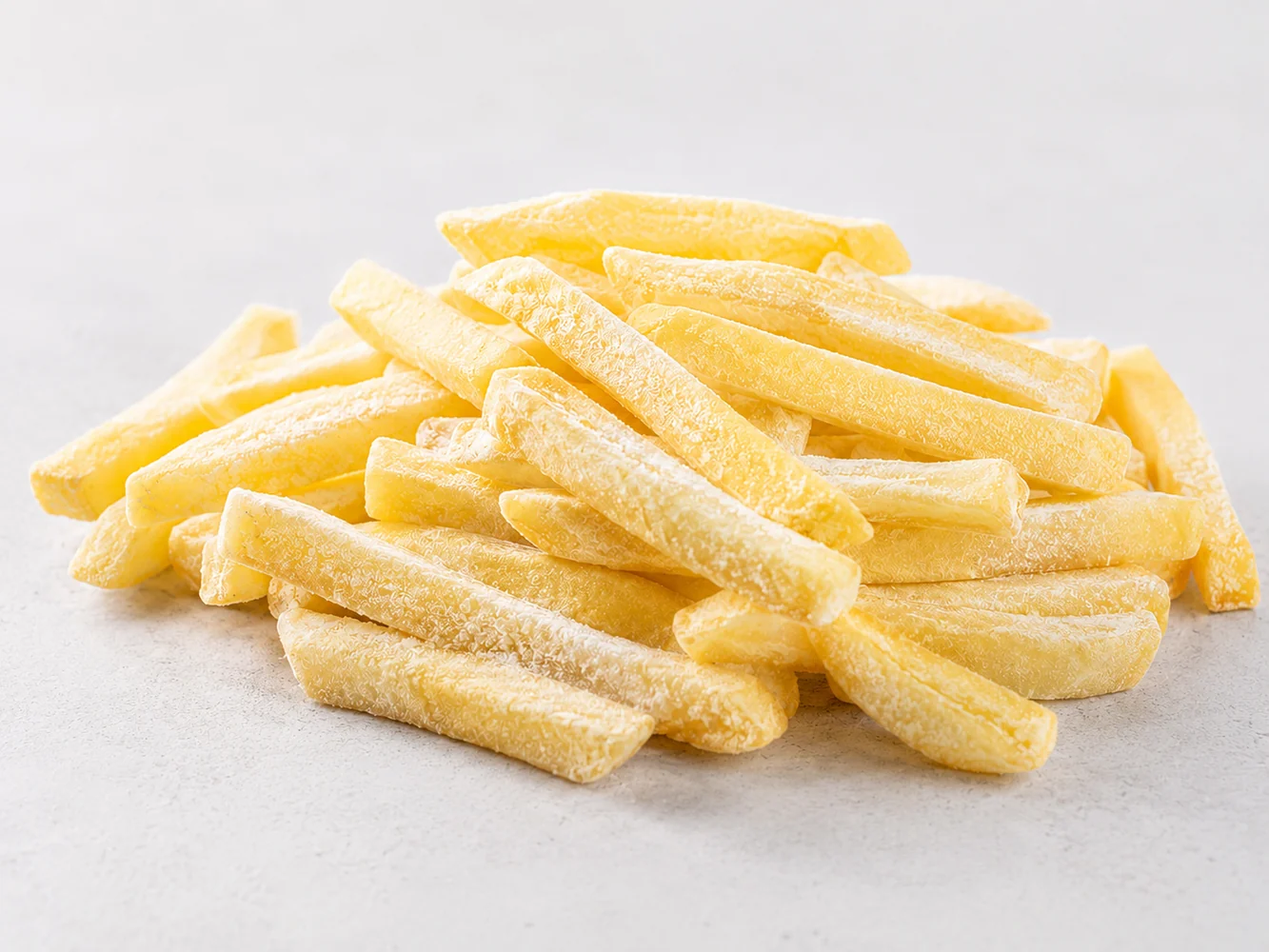
A thicker straight cut can provide a more substantial potato centre and should be compared for colour, crispness and holding under the intended service conditions. Frozen French Fries should be tested in the buyer actual fryer and holding conditions for cut, fried colour, crispness, interior texture, breakage and cold-chain performance. Their approval route is different from dehydrated Potato Flakes and Potato Granules.

Crinkle or differentiated cuts

Shape and surface area affect presentation, texture and frying behaviour, so approval should use the actual cut specification and sample. Bulk French fries sourcing should also align packing, frozen condition, destination cold chain and transport conditions with the approved frying trial rather than relying on appearance or one generic frying setting.

Private-label & packing review

Confirm inner bag, carton, net weight, label language, barcode, artwork and destination requirements before commercial approval. Bulk French fries sourcing should also align packing, frozen condition, destination cold chain and transport conditions with the approved frying trial rather than relying on appearance or one generic frying setting.

Buyer checklist

Frozen French Fries Buyer Review Points

Price comparison becomes meaningful only after the cut, fry test, defect standard, packing and cold-chain basis are aligned. Bulk French fries sourcing should also align packing, frozen condition, destination cold chain and transport conditions with the approved frying trial rather than relying on appearance or one generic frying setting.

  • Cut size, tolerance and strip-length distribution
  • After-fry colour under an agreed cooking method
  • Initial crispness, centre texture and holding performance
  • Breakage, dark pieces, green pieces and other visible defects
  • Frozen condition, package integrity and cold-chain requirements
  • Packing, label, private-label artwork and destination documents
  • Microbiological requirements according to buyer and market needs
  • Reefer shipment, destination port and trade-term requirements

Supporting information

Move from Sample Approval to Reefer Shipment

A practical purchasing sequence is to define the cut and channel first, approve the sample under realistic frying conditions, confirm the product specification and packing, complete pre-shipment checks and then maintain the agreed frozen chain through dispatch. Frozen French Fries should be tested in the buyer actual fryer and holding conditions for cut, fried colour, crispness, interior texture, breakage and cold-chain performance. Their approval route is different from dehydrated Potato Flakes and Potato Granules.

1 · Define the product

Confirm cut, serving channel, coated/uncoated requirement if relevant, target colour and texture. Frozen French Fries should be tested in the buyer actual fryer and holding conditions for cut, fried colour, crispness, interior texture, breakage and cold-chain performance. Their approval route is different from dehydrated Potato Flakes and Potato Granules.

2 · Approve the sample

Use the buyer’s normal fryer, oil condition, load, time, temperature and holding period for a comparable test. Bulk French fries sourcing should also align packing, frozen condition, destination cold chain and transport conditions with the approved frying trial rather than relying on appearance or one generic frying setting.

3 · Confirm commercial supply

Align packing, quantity, destination, required documents and reefer-shipment conditions before order release. Bulk French fries sourcing should also align packing, frozen condition, destination cold chain and transport conditions with the approved frying trial rather than relying on appearance or one generic frying setting.

Buyer FAQ

Questions Buyers May Ask

Which frozen French fry cut should a foodservice buyer choose?

There is no universal best cut. Thin cuts generally cook faster and can give a lighter crisp style, while thicker cuts provide a more noticeable potato centre. Compare candidate cuts under the actual fryer and holding conditions before approval.

What should be checked during a fry test?

Use a consistent fryer, oil condition, load, time and temperature, then record colour, initial crispness, centre texture, breakage and performance after the normal holding period. A sample should be judged under the conditions in which the customer will actually serve it.

What frozen condition should be reviewed on arrival?

Check clumping, surface frost, package integrity, carton condition and whether the required frozen chain has been maintained. Any acceptance criteria should be linked to the final specification and shipment conditions. For China Potato Flour sourcing, start from the finished food and process, then define whether Potato Flakes or Potato Granules should enter the first trial. Keep the approved sample, specification, TDS, COA and quotation aligned to the same grade.

Can private-label frozen French fries be discussed?

Yes, subject to production and packing feasibility. Provide the target bag size, carton format, artwork, barcode, label language, destination market and expected volume so the packing project can be reviewed correctly. Buyer approval should connect the application, process, critical performance points and bulk-supply conditions. Potato Flakes and Potato Granules should be compared in the real formulation rather than selected only by name or price.

What information is needed for a comparable quotation?

Provide the cut, packing, expected order volume, destination port, foodservice or retail channel, required cold-chain conditions, certificates or reports and the preferred trade term. Without these details, quotations may not be based on the same product and logistics route.

Should frying time and temperature be treated as one fixed guarantee?

No single setting suits every fryer, load, oil condition and target colour. Supplier guidance can be a starting point, but the customer should validate the supplied SKU on the actual equipment and record the approved method.

Which quality points can be written into a purchasing specification?

Depending on the project, buyers may define cut tolerance, strip length, breakage, visible defects, after-fry colour, texture, packing, frozen condition and microbiological requirements. Limits and test methods should be agreed before the order.

How is frozen-fries purchasing different from Potato Flakes or Potato Granules?

Frozen fries are a finished frozen potato product and are approved mainly through cut, fry performance, packing and cold-chain criteria. Potato Flakes and Potato Granules are dehydrated food ingredients and are reviewed through application behaviour, hydration, dry handling and ingredient specifications.

Next step

Request the Frozen-Fries Specification for Your Channel

Share the required cut, frying method, target colour and texture, packing, expected volume, destination port and cold-chain requirements so the sample and quotation can be aligned to the same purchasing basis. For China Potato Flour sourcing, start from the finished food and process, then define whether Potato Flakes or Potato Granules should enter the first trial. Keep the approved sample, specification, TDS, COA and quotation aligned to the same grade.

Send Requirements
Get Price, MOQ & SamplesLive reply 07:00–19:00 (UTC+8) · Daily
Request a Quote
Share 3 quick details — we will prepare specs, MOQ & pricing.
B2B inquiry · quotation & specification support