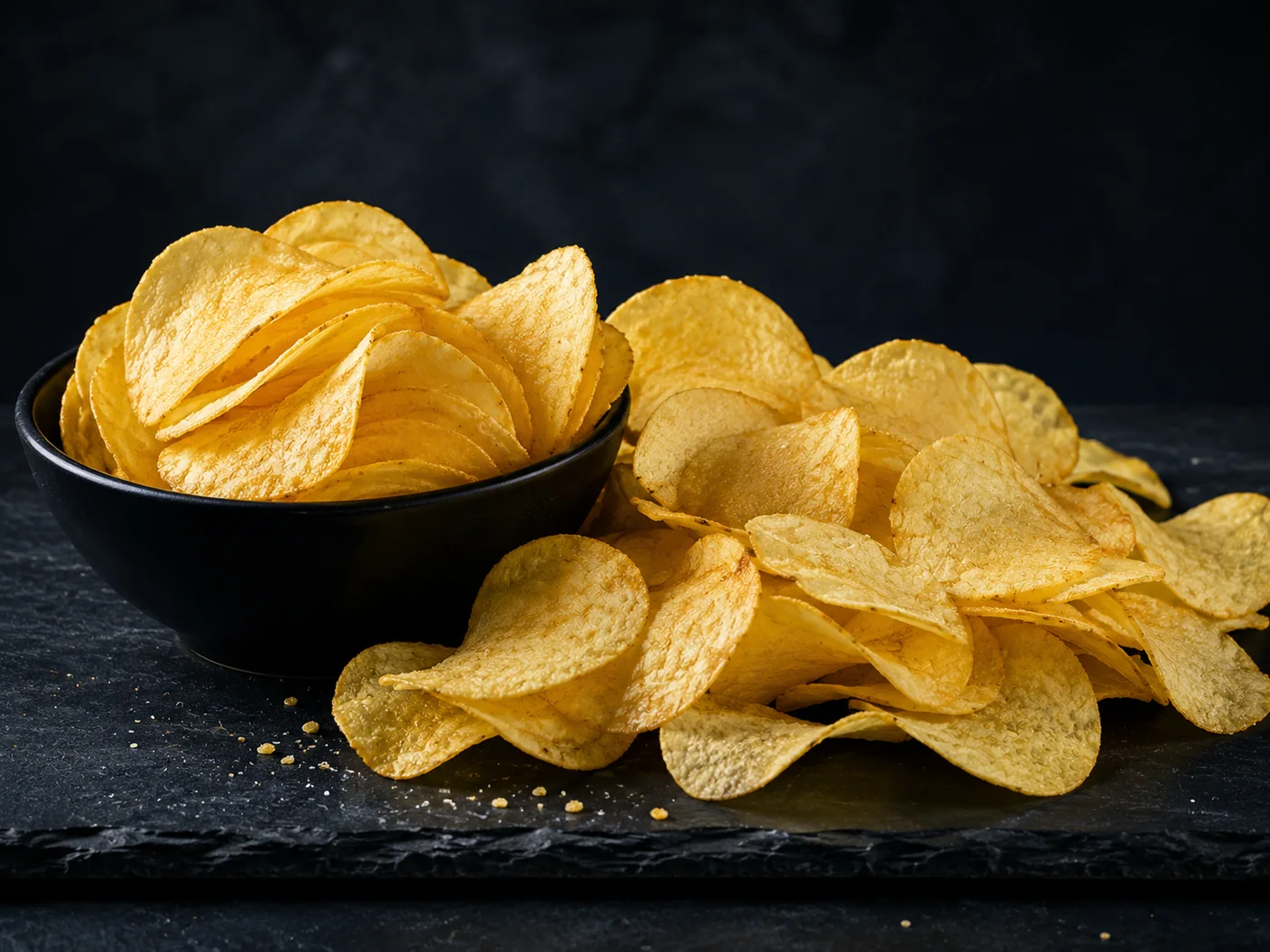
Are Potato Flakes the normal starting point for fabricated potato chips?
They are a strong starting point because they provide dehydrated whole-potato solids and a hydration profile that can be evaluated directly in chip dough. The correct grade still depends on the buyer’s recipe, forming equipment, frying profile and target colour and texture, so supplier selection should be confirmed through a controlled line trial.
Why should fabricated-chip buyers pay attention to reducing sugar?
Reducing sugar can contribute to browning during frying, so it becomes particularly relevant when the finished chip must remain within a controlled colour range. Buyers should review the value together with potato-flake consistency and then validate the actual fried colour under their own oil, temperature, time and formulation conditions.
Can Potato Granules replace Potato Flakes one-for-one?
Not safely by assumption. Granules differ in particle structure, bulk density, dry handling and hydration behaviour. A direct substitution can change water demand, dough handling and finished texture. If granules are being evaluated, keep the rest of the formula and process as stable as possible during the first comparison.
What should be tested before approving a Potato Flakes supplier for chips?
Review the current specification, TDS and COA, but also run an application trial that records hydration, dough handling, forming stability, frying colour, blistering, crispness, flavour and final moisture. A technically compliant raw material should still be proven in the customer’s production conditions.
Can potato starch be used with Potato Flakes in a fabricated-chip formula?
Yes, where the formulation needs additional binding, structural control or texture adjustment. Its role should be defined separately from the whole-potato solids supplied by flakes. The appropriate starch type and level should be set by formulation trials rather than by a universal recipe.
How should two Potato Flakes samples be compared fairly?
Use the same base recipe, water, mixing method, resting time, forming settings and frying profile in the first A/B trial. Change only the potato-flake sample. This makes differences in water demand, dough behaviour, colour and texture easier to attribute to the raw material instead of process variation.
What information should I send when requesting a sample or quotation?
Provide the finished chip type, current potato ingredient if available, mixing and forming method, frying conditions, target colour and crispness, expected purchase volume, packing requirement and destination. This allows the supplier to recommend a more relevant Potato Flakes grade and quotation basis.
How should I evaluate a long-term China Potato Flakes supplier?
Look beyond the first sample. Review specification control, COA consistency, batch-to-batch performance, document support, packing, lead time, export coordination and the supplier’s ability to respond when production results change. Long-term approval should combine technical repeatability with commercial execution.