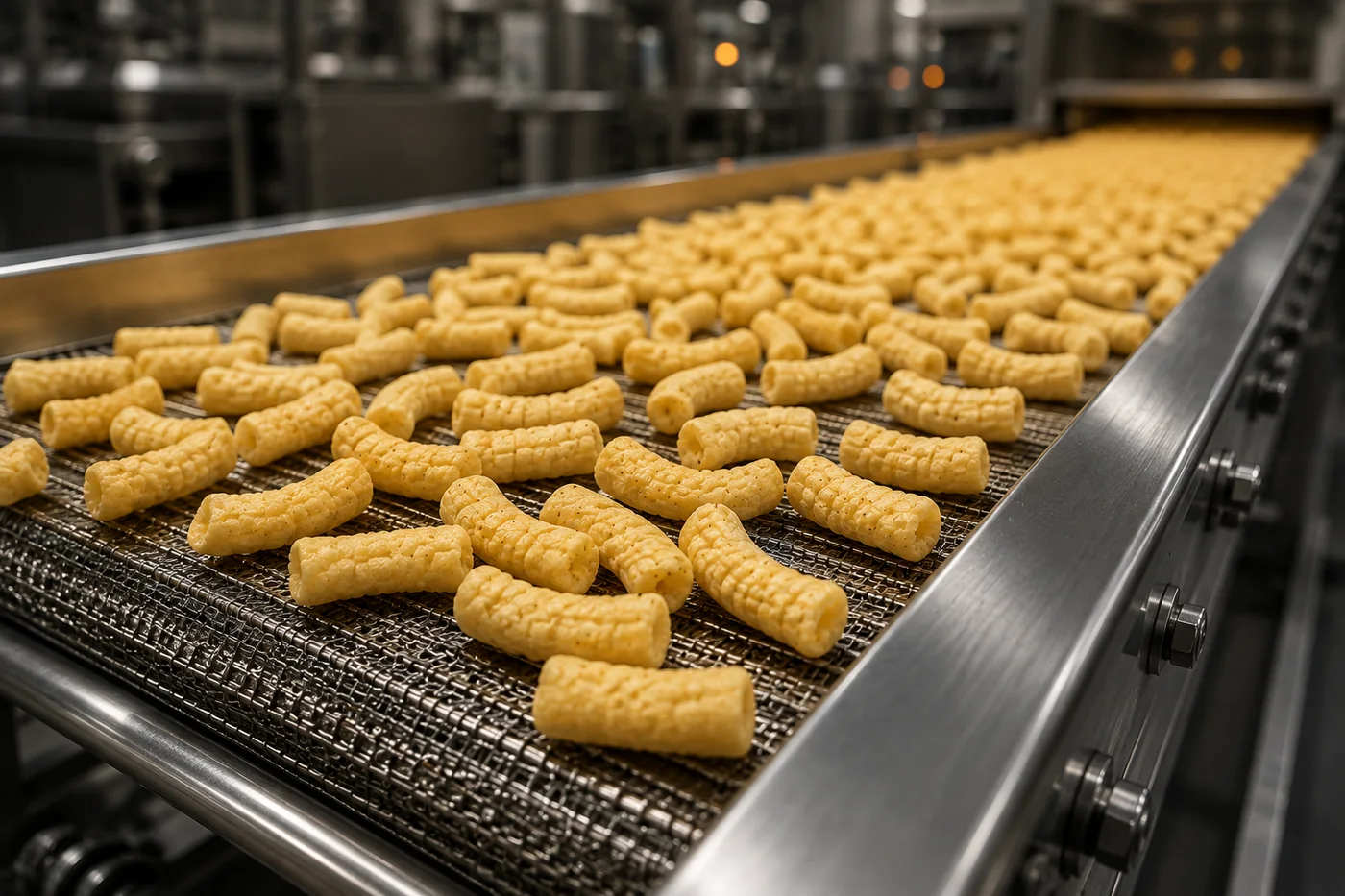
Why are Potato Granules a good starting point for extruded snacks?
Their granular format can be useful in dry blending, metering and repeatable feeding, which are important before material even reaches the extruder. They also contribute potato solids and functional starch. However, the finished expansion and crispness still depend on the full formula, moisture, shear, temperature, pressure, die design and downstream drying or frying.
Is higher expansion always better?
No. A commercially successful extruded snack also needs controlled density, uniform cell structure, a pleasant bite, stable crispness and manageable final moisture. A sample that gives the highest expansion may still be too fragile, too hard, irregular or unstable after drying and storage.
Can Potato Flakes be used instead of Potato Granules in extrusion?
They can be compared, but not treated as an automatic one-for-one substitute. Flakes have a different physical structure and hydration behaviour, which can alter dry handling, water demand and extrusion response. Run an A/B trial with the rest of the formulation held constant before changing the formula.
Which Potato Granules specifications matter to an extrusion buyer?
The relevant review normally includes moisture, particle distribution, bulk density, flow and handling, hydration behaviour, appearance and microbiological limits, together with the current specification, TDS and COA. The most important acceptance test is still performance on the buyer’s actual line.
Why is bulk density important in extruded snack production?
Bulk density can affect volumetric dosing, hopper behaviour, storage volume and the relationship between different dry ingredients in a blend. A meaningful supplier comparison should therefore use consistent test methods and consider whether a density change alters feed rate or formula control.
What should be recorded during an extrusion trial?
Record dry-blend flow, feed stability, water addition, conditioning, motor load or pressure where available, temperature settings, die behaviour, expansion, density, cell structure, crispness and final moisture. Without process records, it is difficult to separate raw-material effects from equipment variation.
Should I approve a Potato Granules supplier from COA data alone?
No. COA data is useful for lot control, but it cannot fully predict feeding, expansion or crispness in a specific extrusion system. Supplier approval should combine documents with a controlled sample trial and, for long-term purchasing, batch-to-batch production evidence.
What should I send when requesting Potato Granules samples and a quotation?
Send the snack type, extruder information, current formula or potato-solid source, target expansion and texture, post-extrusion drying or frying method, trial quantity, expected commercial volume, packing and destination. This helps the supplier select a more relevant sample rather than a generic grade.